Holiday Gift Guide for Quantum Geeks: 10 Ideas Under $100
Quantum-themed gifts are easy to find and surprisingly easy to get wrong. A glowing atom lamp looks the part, but it won't explain why a qubit differs from a bit. Everything below leans the other way: books, puzzles, prints and small bench toys that leave the recipient knowing something they didn't know before, and all of them fit comfortably under $100. Prices move around with sales and new editions, so treat any figure as a rough map rather than a promise.
Books That Earn a Second Read
The most common mistake is buying the most advanced title on the shelf. It ends up on a nightstand, unread, quietly accusing everyone involved. Match the book to where the reader actually is, not where you hope they'll be.
For the curious beginner
- Quantum Computing for Everyone by Chris Bernhardt — qubits, entanglement and teleportation with almost no mathematics. A solid first book for a software developer who keeps hearing the word "quantum" at work.
- How to Teach Quantum Physics to Your Dog by Chad Orzel — the measurement problem explained through a running conversation with a very interested dog. Genuinely funny, and careful about the physics.
- Quantum Physics for Babies by Chris Ferrie — the board-book end of the market. Fine for a toddler, and a fair five-minute refresher for the adult reading it aloud.
For the reader who wants the machinery
- Quantum Mechanics: The Theoretical Minimum by Leonard Susskind and Art Friedman — bra-ket notation built from scratch, no shortcuts taken.
- Quantum Computing since Democritus by Scott Aaronson — essays linking computation, complexity and physics. It rewards readers who come from outside the field.
- Programming Quantum Computers by Eric Johnston, Nic Harrigan and Mercedes Gimeno-Segovia — every concept arrives with a small code example attached, which is how a lot of people actually learn.
- Dance of the Photons by Anton Zeilinger — the experimental view: interferometers, entanglement swapping, and what a working lab really looks like at 2 a.m.
Buy from a shop with easy returns and include the receipt. That reads as confidence in the gift, not as doubt about the recipient.
Puzzles and Games That Smuggle In the Physics
Games work because the rule that makes the puzzle difficult is often the rule that makes the physics strange. Nobody minds losing a round to a measurement problem.
- Quantum Chess — pieces can sit in superposition, and attempting a capture triggers a measurement that may or may not succeed.
- Schrödinger's Cats — a bluffing card game built entirely around boxes you are not allowed to look into. Portable and quick.
- Quantum, the board game — dice act as qubits, and cards let you entangle them before a roll resolves.
- Entanglement — tile-laying, quiet, and a decent excuse to explain what the word actually means.
- A plain Rubik's cube — every move is reversible and nothing collapses until you stop to inspect a face. That is a surprisingly serviceable first analogy for a unitary gate.
Wall Art That Teaches Something
A poster is worth hanging only if the diagram is correct. Look for a Bloch sphere, Feynman diagrams, the double-slit interference pattern, a Bell test schematic, or a clean circuit diagram for Grover's algorithm. Those all survive a second glance from someone who knows the subject.
Public-domain repositories and the image archives of major research organisations carry high-resolution versions of many of these. Print on matte paper at a decent size, frame it properly, and add a short typed caption underneath explaining what the reader is looking at. That caption is what turns a print into a lesson.
One warning: much of the "quantum computer" art sold online contains equations that mean nothing at all, stitched together for texture. Check the notation and check the credit line. If neither holds up, keep looking.
Desk Demos That Fit in a Drawer
Optics beats ornament every time, because it can be tried in under a minute.
- Two sheets of linear polarising film. Look through one, rotate a second against it and the view goes dark. Now slide a third between them at roughly 45 degrees — light comes back. Superposition and projection, no algebra required, and the sheets cost about as much as a paperback.
- A diffraction grating slide and a laser pointer. The dot becomes a row of dots. Wave nature, visible on a wall across the room.
- A glass prism and a simple spectroscope. Good for showing that white light is a mixture, and for spotting the bright lines in a streetlamp.
- A small Fresnel lens or a hand-held interferometer kit. The interference fringes are the point; the box it comes in is not.
If the gift is going to a teenager, stay with Class 2 lasers or lower, never point them at anyone's eyes, and check local rules before buying. A short printed set of instructions is part of the gift.
Kits, Notebooks and Other Odds and Ends
- A dot-grid notebook — anyone working through the algebra on paper will use it daily, which is more than can be said for most gifts.
- 3D-printed models of a Bloch sphere or a qubit from a local makerspace, which often sell cheaply and hold up on a desk.
- A microcontroller and photodiode kit for building a measurement-based random number generator. Ambitious, but a genuinely instructive weekend project.
- A diffusion cloud chamber for the patient recipient with a well-ventilated room — you can watch tracks left by cosmic rays. It uses alcohol vapour, so read the instructions first and keep it a supervised activity.
- A course gift card for an online quantum computing introduction, which pairs well with the Bernhardt book above.
Wrapping It Up: How to Choose Without Guessing
Pick one substantial item and one small companion piece. A beginner's book plus a pair of polarising sheets is the strongest combination on this list, and it keeps the total well under the ceiling. For someone already writing code against a quantum SDK, swap the book for the programming title and add a dot-grid notebook.
Write a card with one concrete instruction: "page whatever, do the three-filter test, then tell me what surprised you." A gift with a first step attached gets used. A gift that only glows gets dusted.
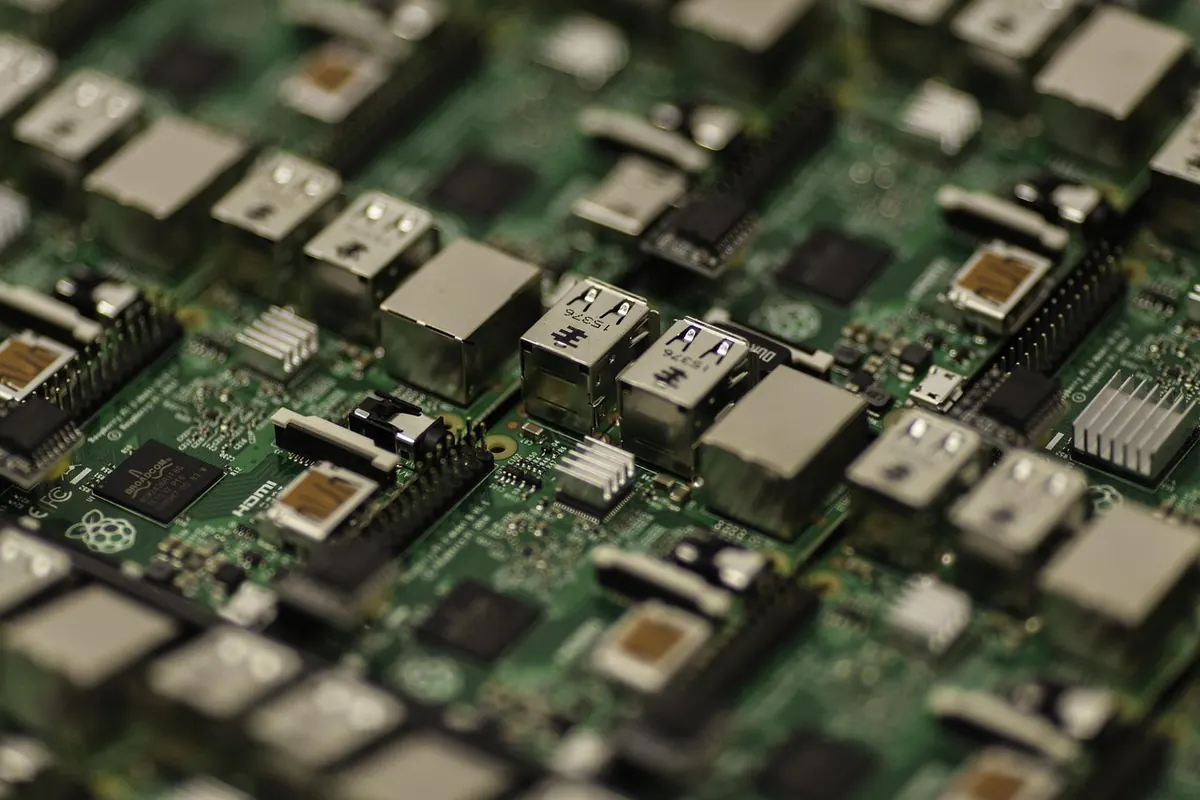
Photo: İbrahim Doğan / Pexels

Checklist: Is Your Business Ready for Post-Quantum Cryptography Migration?
A practical readiness checklist for IT teams: inventory vulnerable encryption, rank data by...

Quantum Supremacy vs. Quantum Advantage: Untangling the Headlines
Quantum supremacy and quantum advantage get used interchangeably in headlines, but they describe very...
About Us