Quantum Computing Jargon Decoded: 30 Terms to Know Before Your First Article
Quantum computing has a vocabulary problem. The physics is hard enough; the shorthand is worse. A single paragraph on a lab blog can hand you eight terms at once, some borrowed from computer science, some from condensed matter physics, some invented because somebody needed a label that week. The thirty below are the ones that turn up most often, roughly in the order you will meet them. Read this once before you start writing, then keep it open while you draft.
Start With the Four Words Everyone Repeats
Qubit. A classical bit is a switch. A qubit is a physical system you can control and read out: a superconducting circuit, a trapped atom, a photon. Saying it is "0 and 1 at the same time" is the standard shortcut, and it is not so much wrong as useless. The useful point is that a qubit's state is described by amplitudes, and amplitudes can interfere, cancelling in some places and reinforcing in others. That interference is where the computation happens.
Superposition. The state of a qubit that is not a plain 0 or 1. Beginners often describe it as "we don't know which one it is yet." That is classical ignorance wearing a costume. The difference is testable: interfering amplitudes produce patterns that a hidden-but-definite value cannot explain.
Entanglement. A correlation between qubits stronger than any shared classical variable could produce. Measure one and you learn something about the other. It is a resource several algorithms need, but entanglement by itself computes nothing; the work is done by gates that rearrange it.
Measurement. Reading a qubit ends its superposition and returns one classical bit. Because you usually get one answer per run, algorithms are repeated many times and the result arrives as a histogram, not a single clean number.
Coherence, Fidelity, and the Error Budget
Every quantum calculation is a race against noise. Heat, vibration and stray electromagnetic fields all push qubits back toward ordinary classical behaviour.
Coherence time is how long a qubit holds its quantum state before that push wins. On some hardware it is measured in microseconds; on others it is far longer. Treat it as the budget everything else has to fit inside.
Decoherence is the loss of that coherence, the process that turns a carefully prepared state into mush.
Gate fidelity is how close an operation lands to its ideal version. High numbers look reassuring in isolation, but errors multiply. A circuit with a few hundred gates compounds small mistakes quickly, which is why tiny gains in per-gate accuracy change what a machine can attempt at all.
Error correction is the response: spread one piece of information across many physical qubits so errors can be detected and repaired faster than they pile up. It only works below a hardware-specific threshold, which is the reason fidelity improvements matter so much.
Logical qubit. A protected qubit assembled from many physical ones. Announcements tend to quote physical counts, because they are larger. When you see a number, check which kind it refers to before you repeat it.
Hardware: The Names in the Photograph
Most coverage of a new machine opens with a golden chandelier and a handful of technology labels. These are the five you will keep encountering.
- Transmon. A superconducting qubit built around a Josephson junction, fabricated with chip-making techniques and operated at temperatures near absolute zero. The dominant architecture in commercial systems.
- Trapped ion. A single charged atom held in place by electromagnetic fields, manipulated with lasers or microwaves. Slower gate times, high fidelity, and qubits that can be moved and reconnected.
- Photonic qubit. Information carried by light. Attractive for networking and for operating without extreme cooling, harder when it comes to storing states and entangling them on demand.
- Topological qubit. A design in which information is encoded so that local disturbances cannot easily corrupt it. Still largely experimental, and worth treating cautiously in headlines.
- Dilution refrigerator. The chandelier. It cools superconducting hardware to millikelvin temperatures, and its wiring, not its cooling power, is often the practical constraint on how many qubits can be controlled.
Software and Algorithm Lingo
Quantum circuit. The program. It looks a little like sheet music: horizontal lines for qubits, symbols for operations, read left to right, ending in measurements.
Quantum gate. An operation on one or two qubits. Unlike most classical logic gates, quantum gates are reversible, which is why they are described as rotations rather than switches.
NISQ. Short for noisy intermediate-scale quantum: today's generation of devices, with enough qubits to be interesting and too much noise for full error correction. The term is useful for setting expectations, and occasionally used as an excuse for weak results.
Variational algorithm. A loop rather than a sprint. A quantum processor prepares a state from a set of adjustable parameters; a classical computer measures the outcome, tunes the parameters, and repeats. This suits noisy hardware because it tolerates imperfect runs and never demands a perfect answer.
Ansatz. The parameterized circuit template in a variational algorithm, chosen before optimization begins. Picking a good one is part physics insight, part trial and error.
VQE. The variational quantum eigensolver, the best-known variational method, aimed at ground-state energies of molecules and materials.
QAOA. The quantum approximate optimization algorithm, the optimization-flavoured cousin, applied to combinatorial problems.
Quantum annealing. A different approach entirely: a physical system is allowed to settle into a low-energy configuration that maps onto your problem. Strong for some optimization tasks, but not a universal gate-based machine, and not directly comparable to one.
Oracle. A black box an algorithm is allowed to query. Grover's search, for instance, uses an oracle that marks the item you want; the algorithm finds it with fewer queries than a classical search needs. That is a real result, but it is not a blanket speed-up for every problem in the neighbourhood.
Metrics and Adjacent Jargon
Quantum volume. An attempt to boil overall capability into one number, taking qubit count, connectivity and fidelity together. Useful as a rough comparator, contested as a scoreboard.
CLOPS. Circuit layer operations per second, a throughput measure. It tells you how fast a machine can be fed circuits, not how correct the answers are.
Quantum advantage. A demonstration where a quantum device does something a classical machine cannot do in reasonable time. Read these claims closely: the task is often narrow, and the classical bar keeps moving.
Quantum key distribution. Using quantum states to distribute encryption keys while detecting eavesdropping. It is about key exchange, not about computing faster, and it needs dedicated hardware and a trusted implementation.
Post-quantum cryptography. Classical algorithms designed to resist attacks from future quantum computers. Keep it separate from key distribution in your writing; most organisations will migrate to these algorithms long before they own a quantum processor.
Quantum sensing. Using quantum effects for measurement: clocks, magnetometers, gravimeters. The least glamorous category and frequently the closest to real deployment.
Hybrid quantum-classical. The standard architecture in practice. A classical computer orchestrates the work and a quantum processor handles a narrow, expensive piece of it.
How to Use This Vocabulary in Your First Article
Accuracy here is mostly a matter of discipline rather than expertise. A few habits will keep you out of trouble.
- Define each term the first time it appears, in one plain sentence, then use it normally. Your reader only needs the definition once.
- Ask three questions of every performance claim: how many logical qubits were involved, what the error rates were, and what the classical comparison actually was.
- Never mix up key distribution with post-quantum cryptography, or physical qubit counts with logical ones. These are the two most common slips in beginner coverage.
- Keep a running glossary file with your own definitions and the date you wrote them. Terms shift meaning as hardware changes.
If a claim does not say how many logical qubits were involved and what it was compared against, it is a press release, not a result.
Write the short version first: qubit, coherence, error correction, variational algorithm. Those four carry most beginner stories. Add the rest as your beat develops.
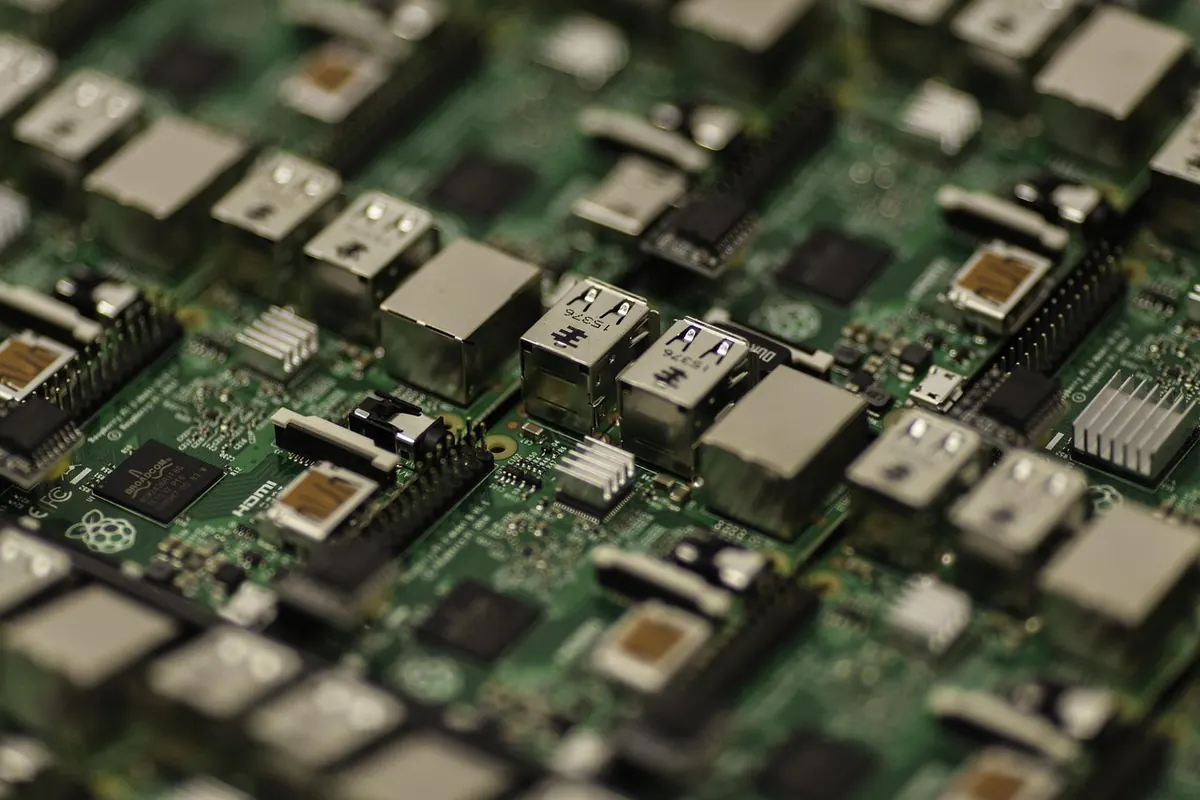
Photo: DariuszSankowski / Pixabay
Checklist: Is Your Business Ready for Post-Quantum Cryptography Migration?
A practical readiness checklist for IT teams: inventory vulnerable encryption, rank data by...

Quantum Supremacy vs. Quantum Advantage: Untangling the Headlines
Quantum supremacy and quantum advantage get used interchangeably in headlines, but they describe very...
About Us