Superconducting vs. Trapped-Ion Qubits: A Practical Comparison for Beginners
Ask anyone who follows quantum computing which hardware matters most and you will hear the same two names. Superconducting circuits and trapped ions are the most mature ways to build a qubit, and they are the two you are most likely to meet if you sign up for cloud access to real quantum hardware. They are also built on completely different physics, which shapes everything a beginner notices: how fast you can run a circuit, how long your information survives, how much machinery sits around the chip, and which companies bet on which approach.
What Each Qubit Actually Is
A superconducting qubit is a manufactured circuit. Picture a small loop of metal interrupted by a Josephson junction, paired with a capacitor, patterned onto a silicon chip with fabrication techniques borrowed from the semiconductor industry. Cooled far enough, that circuit behaves like an artificial atom: current oscillates back and forth, and you control it with microwave pulses. It is a device you can print, thousands at a time, on one wafer.
A trapped ion is an actual atom. You strip an electron from something like ytterbium or barium, hold the charged ion in place with electric fields inside a vacuum chamber, and manipulate its internal energy states with lasers or microwaves. There is no fabrication step for the qubit itself. Nature already made it, and every ion of the same isotope is identical.
That distinction — engineered circuit versus single atom — explains nearly every practical trade-off below.
Speed: Nanoseconds Against Microseconds
Superconducting gates are fast. Single-qubit operations typically take tens of nanoseconds, and two-qubit gates commonly land somewhere between 100 and 500 nanoseconds. Trapped-ion gates are far slower: single-qubit gates in the microsecond range, two-qubit gates often tens to hundreds of microseconds. In rough terms, that is a thousandfold gap.
Why should you care about a number that small? Because an algorithm is a long sequence of gates, and the whole sequence has to finish before the qubit forgets what it was doing. Fast gates let you run deeper circuits before errors pile up. They also mean more repetitions per second, which matters when a result only becomes visible after thousands of shots.
Trapped ions push back on the speed argument with quality. Gate fidelities are typically very high, and because the qubits hold their state far longer, a slower machine can still finish calculations a faster one cannot. Speed and quality are two different budgets, and each technology spends differently.
Coherence: How Long the Information Survives
Coherence time is the window in which a qubit keeps its quantum state before noise erases it. For superconducting qubits, that window has stretched from nanoseconds in the early 2000s to tens or low hundreds of microseconds in today's best devices. Impressive progress, and still short. Every wire, every material defect, every stray bit of infrared heat is a potential source of error.
Trapped ions win this category comfortably. Hyperfine qubits, which store information in nuclear spin states, can hold coherence for seconds, and with error-suppressing pulse sequences, considerably longer. Ions are also uniform: the tenth qubit in a chain behaves like the first, while superconducting qubits vary from device to device because of manufacturing tolerances.
The connectivity angle
There is a second structural difference. Superconducting qubits on a chip are usually coupled only to their nearest neighbors, so connecting two distant qubits means swapping information along a chain, and every swap is another chance to introduce an error. Trapped ions in a single chain can often be entangled in pairs regardless of distance, which makes algorithm design and compilation noticeably simpler. The catch is that long chains slow gate times further and become harder to control, and linking several chains into one machine is still an open engineering problem.
Cooling and the Rest of the Hardware
Superconducting qubits need a dilution refrigerator holding them near 10 millikelvin, colder than deep space, plus layers of shielding and carefully routed microwave wiring. The support equipment is the visible part: racks of room-temperature electronics driving signals down into the fridge. The chip is small; the machine around it is not.
Trapped ions need a different kind of infrastructure. An ultra-high vacuum chamber keeps stray gas molecules from colliding with the ion, and a laser system with dozens of optical paths provides control. Some designs run without any cryogenics, while others add modest cooling to reduce noise. Keeping all those optical alignments stable is the daily chore.
Either way, the practical requirements are similar in spirit:
- A controlled environment that suppresses noise, whether that means extreme cold or extreme vacuum.
- Stable, calibrated control hardware — microwave electronics or laser optics — that does not drift.
- Readout that can distinguish states reliably and quickly.
- A team that understands the specific failure modes of the platform, because they are not transferable.
Who Is Actually Building Them
Superconducting hardware is where the largest industrial efforts sit. IBM, Google, Rigetti and IQM all build superconducting processors, and several of them offer cloud access to real machines. Google's processor work and IBM's roadmap are both superconducting, and the platform benefits from decades of chip fabrication know-how.
Trapped-ion systems come from Quantinuum, IonQ, Alpine Quantum Technologies and a handful of others, with cloud access available from the larger players. Their pitch leans on fidelity and connectivity rather than raw gate speed. It is worth knowing that these are not the only options: neutral atoms, photonic qubits and silicon spin qubits are separate families with their own strengths, and the field is deliberately keeping several bets alive.
How to Decide Which One to Pay Attention To
If you are learning rather than shopping, the honest answer is that you should try both. Free and low-cost cloud accounts exist for superconducting machines, and trapped-ion providers offer similar access. Run the same small circuit on each, look at the results, and notice how differently they behave.
- Start with your algorithm. If it needs many gates in sequence, fast gates matter. If it needs long idle periods or heavy entanglement between distant qubits, coherence and connectivity matter more.
- Count the connectivity you need. A circuit written for all-to-all coupling may need rewriting, sometimes badly, for a nearest-neighbor chip.
- Check the tooling. SDKs, simulators and error-mitigation options vary more between providers than the underlying physics suggests.
- Read the fidelity numbers, not the qubit count. A large processor with modest fidelities is not automatically more useful than a smaller one with better gates.
- Assume error correction is coming. Whichever platform solves that first changes the calculus for everyone, so watch the roadmaps rather than the headlines.
Neither technology is a placeholder. Both are running real workloads today under real constraints, and both have hard problems left to solve. Learn the trade-offs now and you will read the next round of announcements with a much clearer eye.
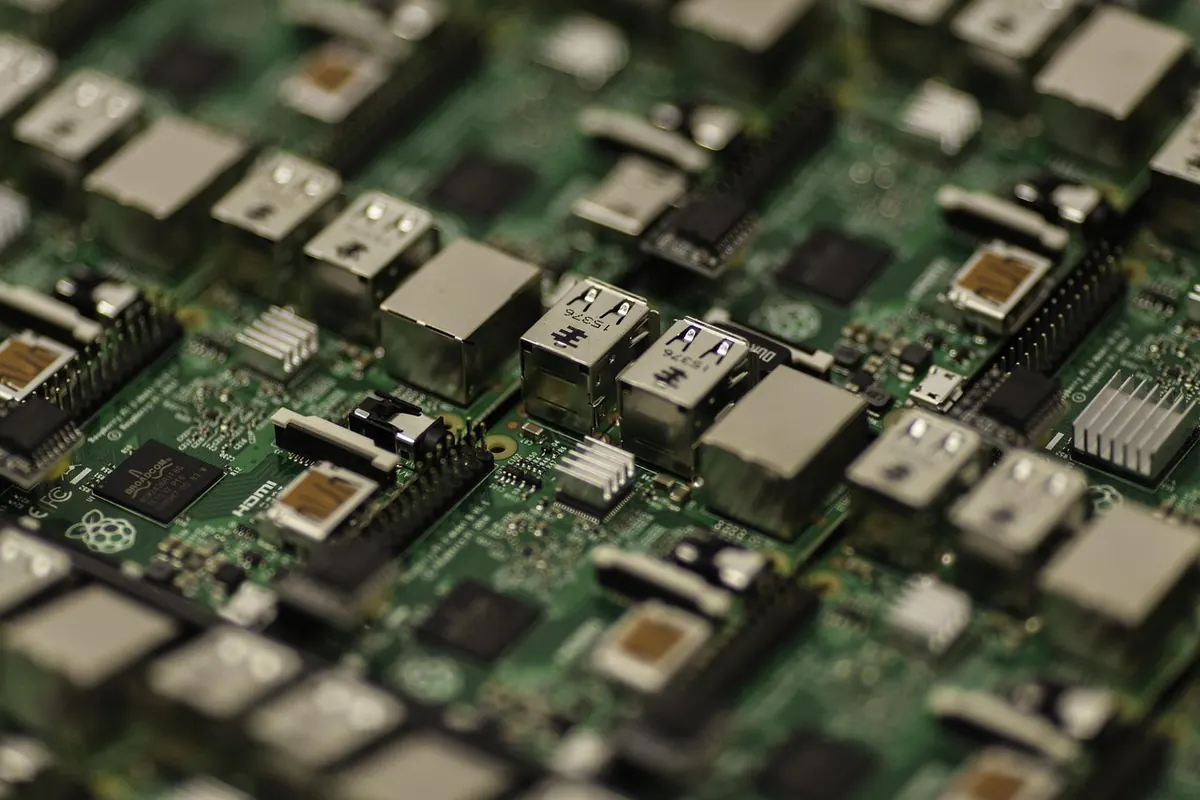
Photo: DarkoStojanovic / Pixabay

Checklist: Is Your Business Ready for Post-Quantum Cryptography Migration?
A practical readiness checklist for IT teams: inventory vulnerable encryption, rank data by...

Quantum Supremacy vs. Quantum Advantage: Untangling the Headlines
Quantum supremacy and quantum advantage get used interchangeably in headlines, but they describe very...
About Us